13 August, 2026
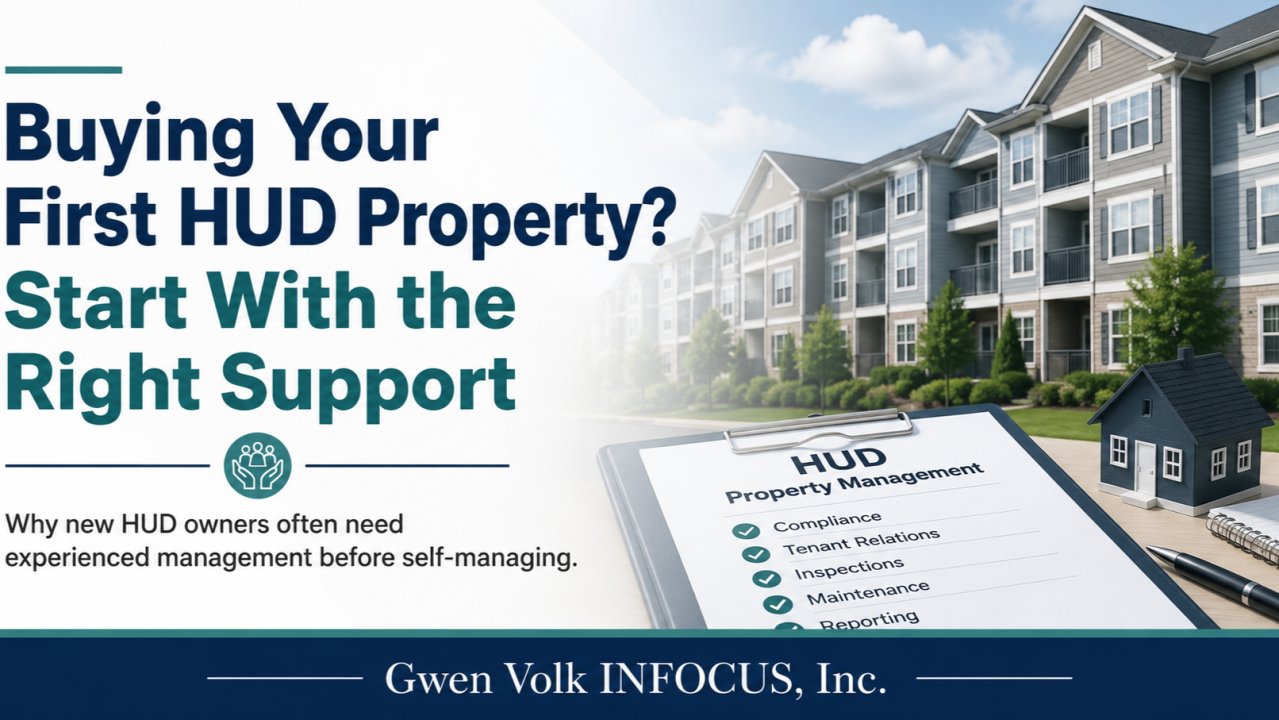
Buying Your First HUD Property? Start With the Right Support
Purchasing a HUD-assisted property can look deceptively familiar to an owner experienced with conventional housing or even other affordable housing programs. There are units, leases, income limits, rent calculations, inspections and regulatory requirements.
But HUD Multifamily housing is its own world.
An owner acquiring a HUD property for the first time needs to understand not only the rules, but also the infrastructure required to operate the property successfully. And that means knowing what type of assistance is needed—and when.
For an owner with no HUD management experience, the answer is usually not simply to hire a consultant and begin self-managing. In most cases, the safer approach is to engage an experienced HUD management agent, either permanently or for a transition period while the owner’s staff learns the program and develops the systems necessary to eventually self-manage.
The Challenge Is Not Just Knowing the Rules
HUD compliance is not a collection of isolated requirements. It is an operating system.
Depending upon the property and subsidy program, management may be responsible for:
- Tenant eligibility and certification requirements;
- TRACS submissions and subsidy billing;
- EIV requirements;
- Tenant Selection Plans and waiting-list administration;
- Affirmative Fair Housing Marketing;
- VAWA requirements;
- Section 504 and reasonable accommodation procedures;
- HUD-required leases, notices and forms;
- Rent increases and contract administration;
- Physical inspection requirements;
- Management and Occupancy Reviews; and
- Extensive documentation and recordkeeping requirements.
Knowing that these requirements exist is very different from knowing how to incorporate them into the daily operation of a property.
That is why experience matters.
The Role of an Experienced Management Agent
An established HUD management company brings more than people who know the regulations. It brings an operating structure.
That may include experienced compliance and property management personnel, established procedures, property management software, TRACS capability, EIV controls, waiting-list systems, file-review processes and experience dealing with HUD, Contract Administrators and reviewers.
For an owner new to HUD, using an experienced agent does not mean giving up the goal of eventually self-managing.
It can provide a transition period during which the owner’s staff can learn the program, receive training, develop appropriate policies and procedures, acquire the necessary technology and establish internal compliance controls.
If self-management is the ultimate goal, those systems should be established before the experienced management structure is removed—not afterward.
Where a Consultant Fits
A consultant serves a very different—and equally important—role.
A knowledgeable HUD consultant can provide the specialized expertise that owners and management companies may not need every day but very much need when a difficult question or unusual situation arises.
That may include:
- Interpreting HUD requirements;
- Researching complex compliance questions;
- Providing an independent second opinion;
- Reviewing policies, procedures and tenant files;
- Training staff;
- Helping prepare for HUD reviews and inspections;
- Evaluating compliance problems and recommending corrective action;
- Developing specialized plans and documents; and
- Helping owners determine the best way to respond when the regulations do not provide an obvious answer.
What a consultant ordinarily does not do is operate the property.
The consultant is not processing every certification, maintaining the waiting list, transmitting TRACS data, supervising site staff or making sure the property’s recurring compliance functions occur every day.
That distinction is important.
Sometimes the answer to a client’s question is consulting.
Sometimes the answer is training.
Sometimes the answer is an experienced third-party management agent.
A good consultant should be willing to tell you which one you actually need.
The Cost of Learning After the Fact
I have worked with owners who were very successful in conventional real estate or other affordable housing programs and understandably assumed that experience would transfer easily to HUD.
Unfortunately, HUD requirements can be particularly unforgiving when systems are not established correctly from the beginning.
Problems may not become apparent until a Management and Occupancy Review, subsidy issue, physical inspection, Fair Housing complaint or HUD inquiry occurs. By then, management may be trying to reconstruct months—or even years—of decisions and documentation.
The consequences can extend well beyond correcting a file. They can include subsidy repayment, findings, corrective-action requirements and increased HUD scrutiny.
That is an expensive way to learn the program.
Get the Right Help at the Right Time
If you are acquiring your first HUD-assisted property, surround yourself with HUD experience before problems develop.
If you do not have an experienced HUD management operation, consider engaging one while you build that capability.
If you already have the operational structure but occasionally encounter questions that require deeper HUD expertise, that is where an experienced consultant can be especially valuable.
And consulting does not necessarily have to mean a large engagement, a retainer or an ongoing contract for services you may not need.
Sometimes what an owner or management company really needs is simply access to an experienced resource when a difficult question arises.
The objective should always be the same: the right expertise, at the right time, for the problem you actually have.