
18 June, 2026
Reconsidering ESA approvals? Not so fast!
HUD/FHEO recently issued a May 22, 2026 internal enforcement memorandum titled Enforcement Guidance – Assessing Requests for the Use of an Animal as a Reasonable Accommodation Under the Fair Housing Act.
The memo says that, effective immediately, FHEO will find reasonable cause and recommend charges in animal-related accommodation cases only where the animal is trained to provide disability-related assistance.
It also says the memo does not address Section 504 or ADA complaint processing.
In other words, HUD/FHEO has adopted the “training” component of the ADA service-animal definition for purposes of FHA enforcement. HUD states that emotional support, comfort, well-being, or companionship do not constitute work or tasks, and that FHEO will find reasonable cause for denial of a pet-policy waiver only where the animal has been individually trained to perform disability-related work or tasks.
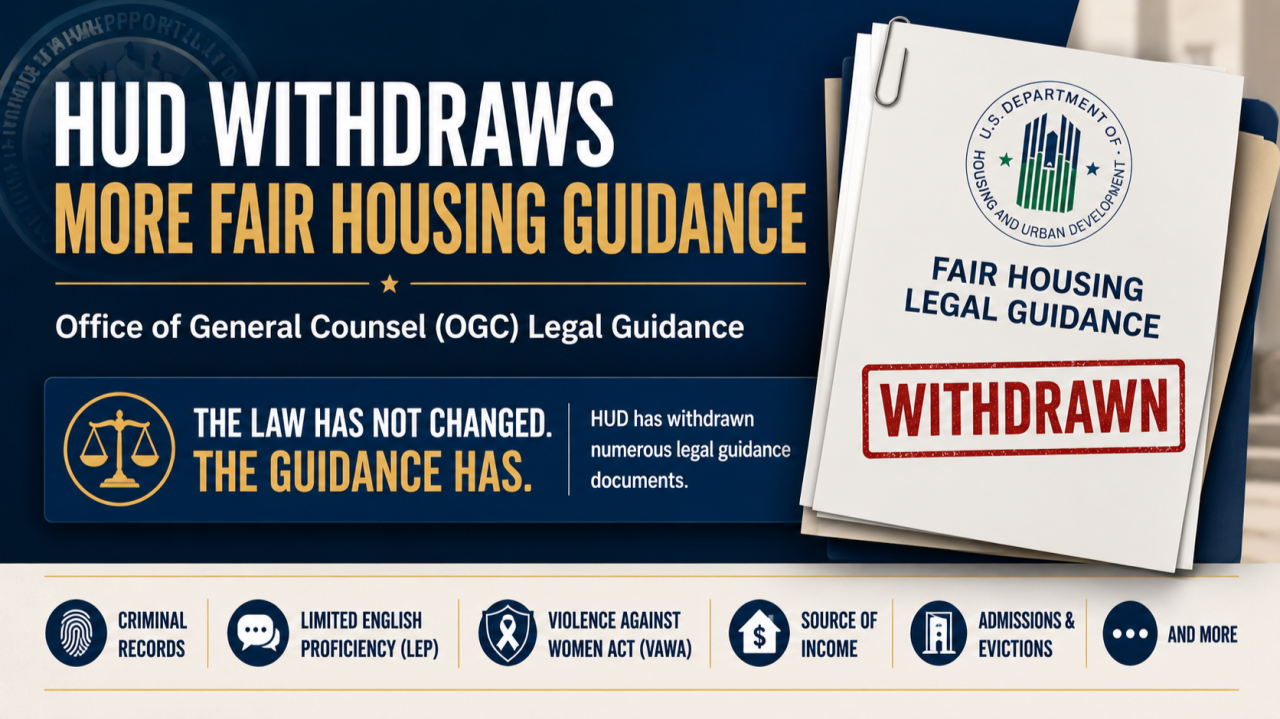
This comes after HUD withdrew the 2013 and 2020 assistance-animal guidance documents. The Federal Register notice says those documents were removed from active use and “should not be relied upon as authoritative.”
But here is the important part: This is not a regulation.
- It does not amend the Fair Housing Act.
- It does not amend 24 CFR Part 100.
- It did not go through notice-and-comment rulemaking.
- In fact, the memo itself says HUD intends to pursue future rulemaking because animal-related accommodation issues are fact-intensive and would benefit from public input.
And it leaves several very big questions unanswered.
For example:
- Does this change how owners should handle existing approved ESAs?
- Can owners now impose pet fees, pet rent, deposits, breed or size restrictions, or pet limits on untrained ESAs?
- What about Section 504 obligations for HUD-assisted housing?
- What about state and local fair housing laws?
- What about private FHA lawsuits? HUD expressly says private court rights are not affected.
Adding to the confusion, HUD’s tenant-facing HCV information page still states that ESAs have protections under the Fair Housing Act and that tenants are not required to pay pet fees or deposits for ESAs. While this is not an owner/agent compliance notice, it is still public-facing HUD information and appears inconsistent with the new FHEO enforcement memo.
So where does that leave owners?
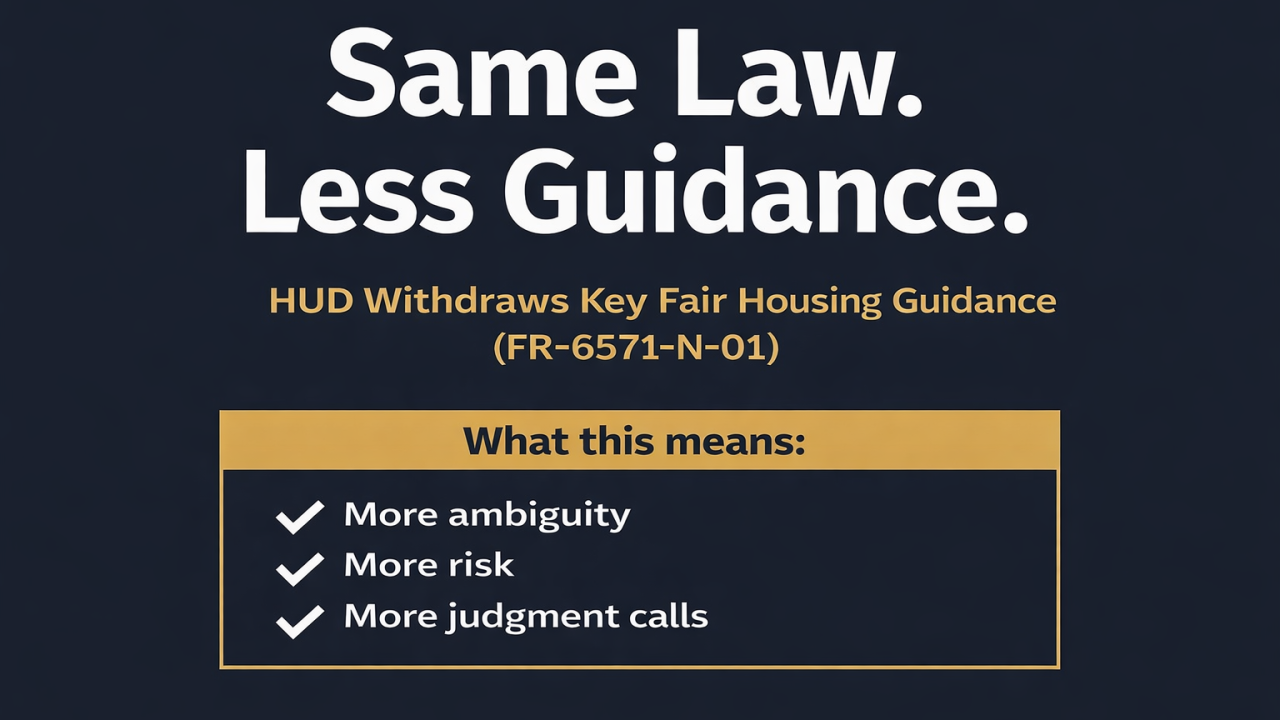
HUD has clearly withdrawn its prior ESA guidance and has adopted a much narrower FHA enforcement posture. That may substantially reduce HUD/FHEO enforcement risk when an owner denies an untrained ESA request.
- But it does not give owners a complete new operating rule.
- It does not eliminate all legal risk.
- And it does not mean every owner should immediately rewrite their policy or stop considering ESA requests.
For now, owners should continue to evaluate requests case by case, especially in HUD-assisted housing where Section 504 may apply, and should consult counsel before making blanket policy changes.
Bottom line: this is a major enforcement shift — not a simple green light to deny ESAs.
#FairHousing #AffordableHousing #HUD #ReasonableAccommodation #ESA #AssistanceAnimals #MultifamilyHousing #Compliance